Overview
Redesigned a core operational module of an internal construction management platform covering employees, projects, inspections, approvals, and compliance data. Replaced dense, unstructured tables with a scalable and unified system.
Challenges
- Multiple modules had no unified interaction model
- Data-dense interfaces created unnecessary cognitive load
- Different roles needed different levels of information visibility
- Platform needed to scale as new modules were added
Goals
- Create a unified interface for operational workflows involving prescriptions, approved requests, company representatives, violations, and related operational data.
- Reduce cognitive load by standardizing UX patterns across modules.
- Improve navigation and usability for large, data-heavy interfaces.
Actions
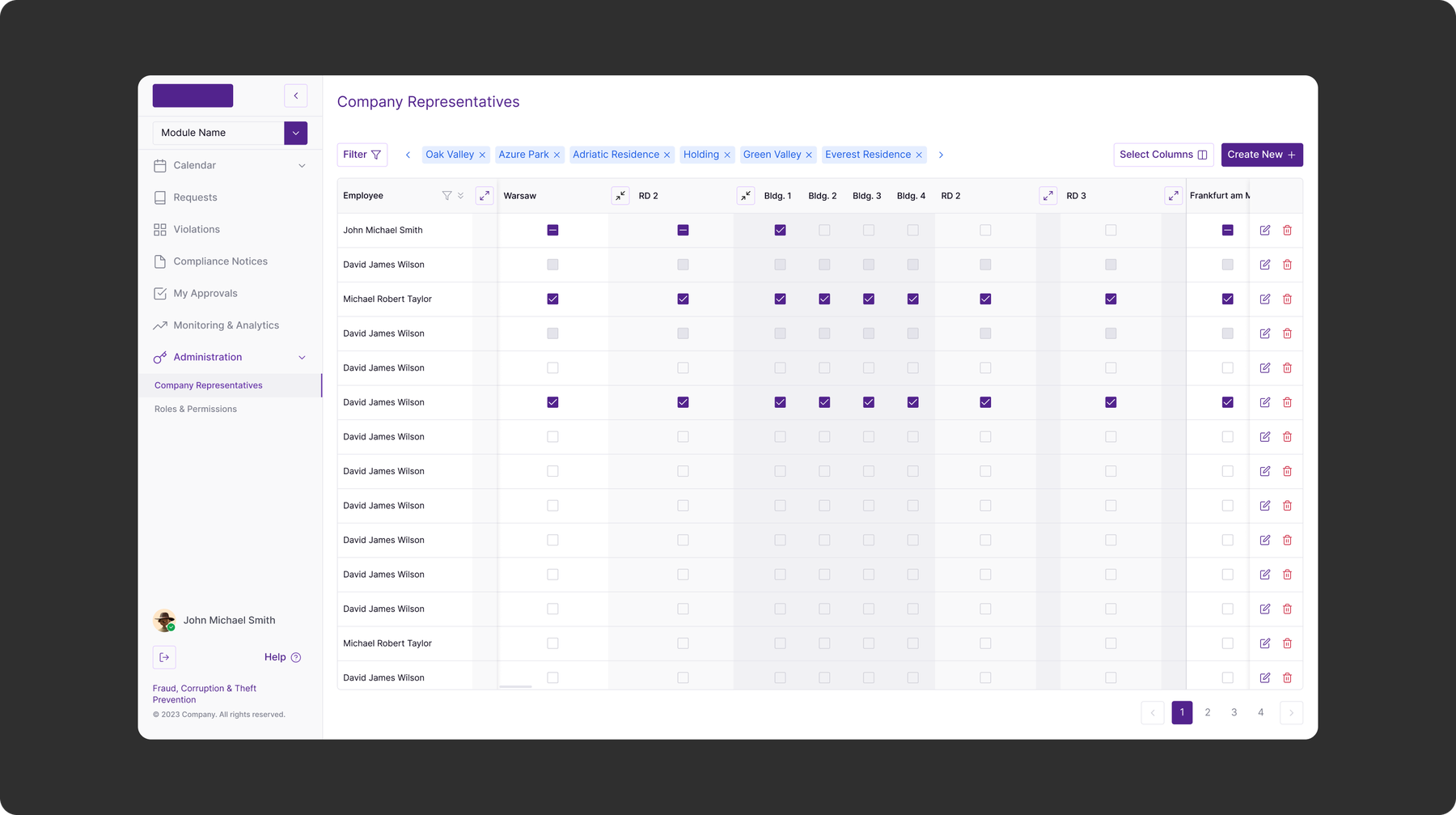
- Designed the Operational Control module, unifying key operational workflows in one interface.
- Standardized tables, filters, statuses, and interaction patterns across multiple modules.
- Reused existing UX patterns where appropriate to reduce the learning curve.
- Designed complex data tables optimized for enterprise workflows.
- Introduced a combined horizontal and vertical hierarchy for navigating deeply nested data.
- Collaborated with analysts, developers, and stakeholders to validate solutions throughout the design process.
Result
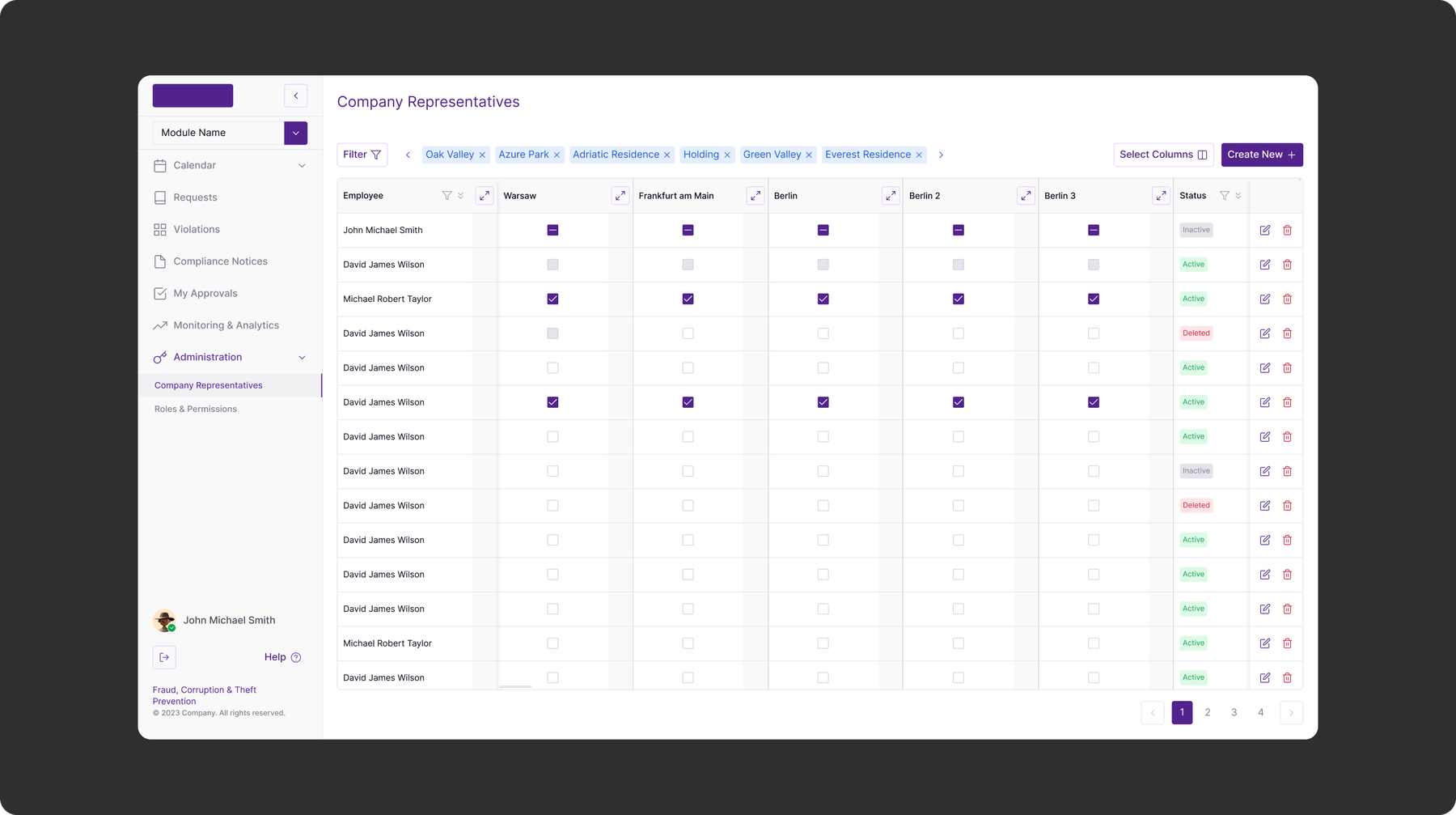
- Built a unified UX foundation across the platform with consistent components, patterns, and interaction logic
- Simplified navigation of complex construction data and improved visibility across projects, employees, inspections, and approvals
- Reduced cognitive load by replacing inconsistent legacy workflows with a structured experience
- Reduced time spent resolving operational questions by nearly 50% through clearer information architecture and workflows
- Created scalable design patterns that accelerated development of future modules
- Improved collaboration between product, design, and engineering teams through shared interaction standards