Overview
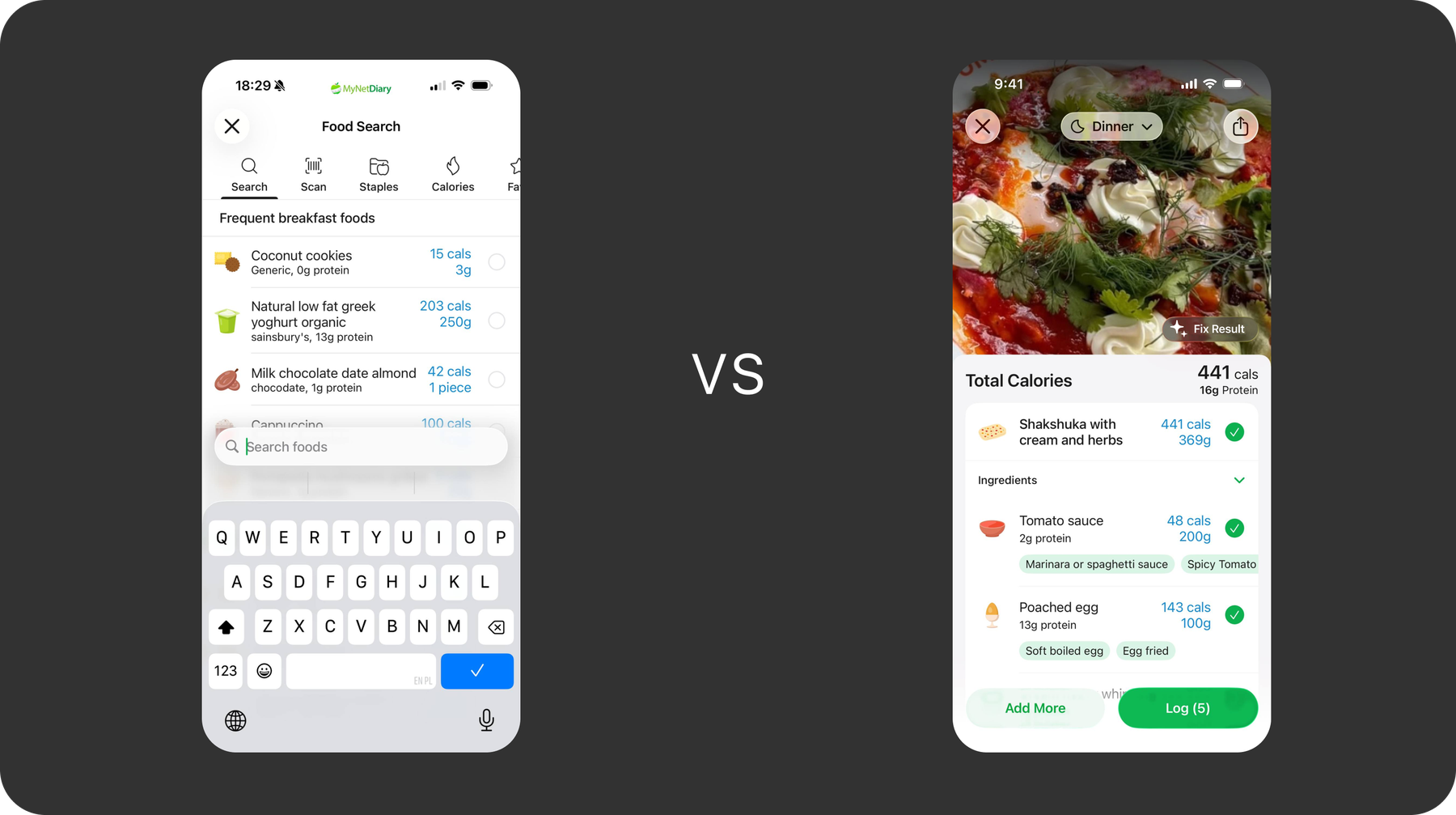
Meal tracking is one of the core experiences in MyNetDiary. However, manually adding every ingredient and portion can become time consuming, especially when users need to log complex meals.
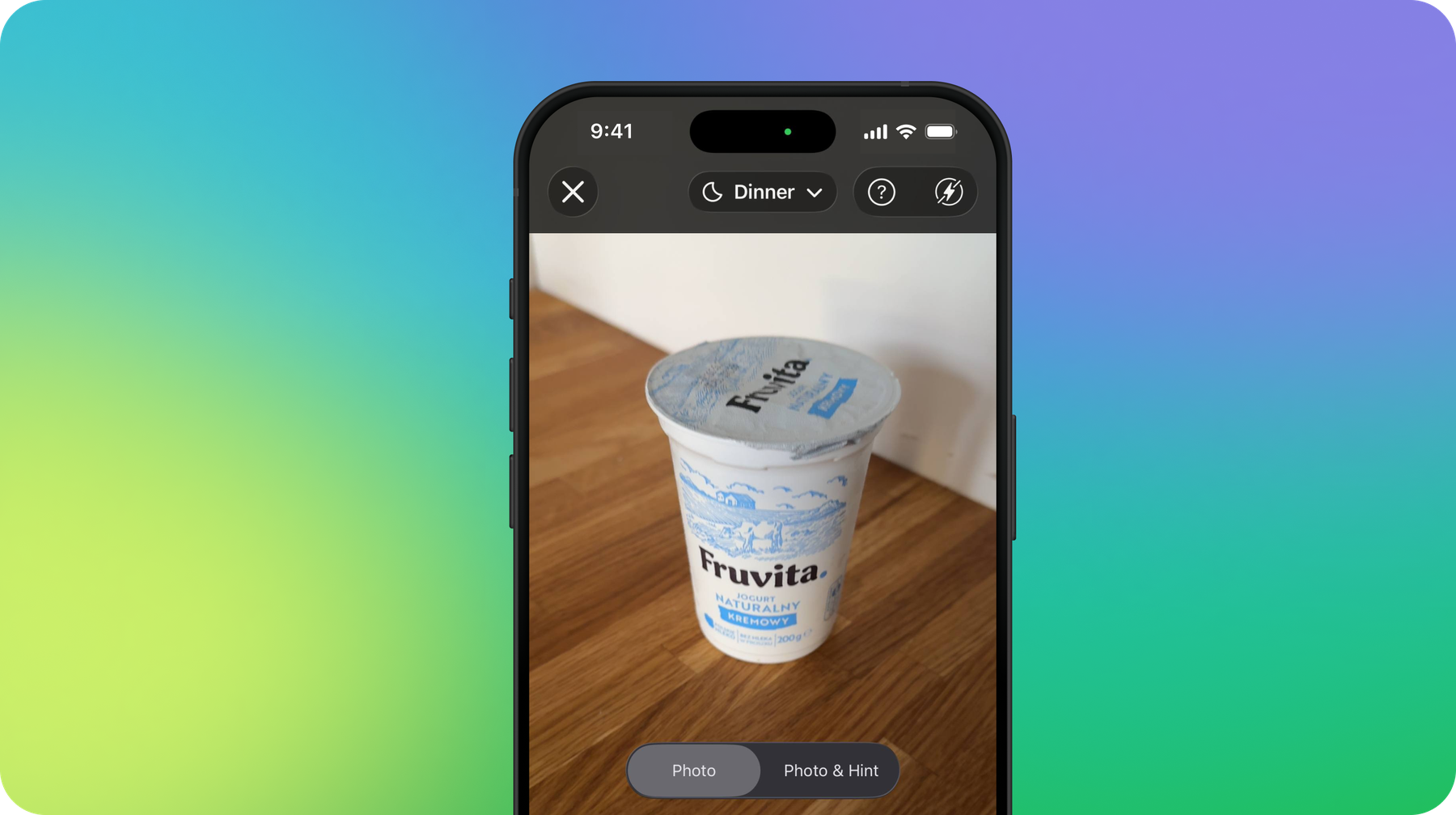
To reduce friction and make tracking more effortless, we introduced AI Meal Scan, a feature that allows users to log meals by taking a photo. The AI identifies food items, estimates portions, and generates nutritional information that users can review and edit.
My goal was to create a simple and trustworthy AI powered experience that helps users track meals faster while keeping control over their data.
Challenge
Making food logging faster while maintaining accuracy

Before Meal Scan, users had to manually:
- Search for each food item
- Select ingredients from the database
- Estimate portions
- Add multiple items separately
This increased the effort required to track meals consistently, especially for:
- Homemade meals with multiple ingredients
- Restaurant dishes
- Everyday meals when users have limited time
The challenge was to reduce the number of steps while maintaining user confidence in the generated results.
Discovery & Design Principles
Understanding how AI can simplify meal tracking
I analyzed existing food logging patterns, competitor solutions, and AI-powered experiences to understand where automation could create the most value.
The research revealed three key principles that guided the design:
Solution
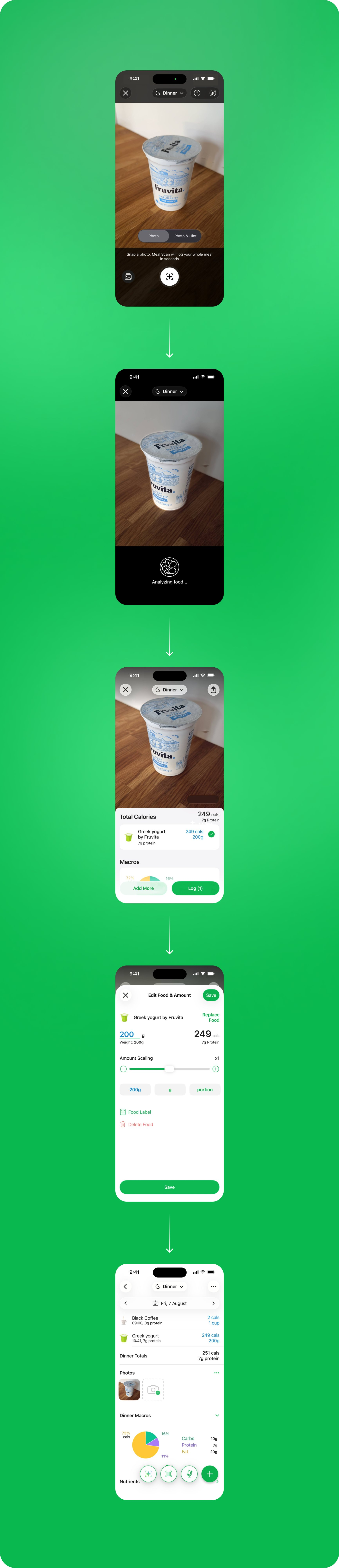
My team and I built an end-to-end AI Meal Scan experience to simplify and speed up meal tracking:
- Scan meal. Users capture a photo directly from the food logging flow.
- AI recognition. The system identifies food items and generates estimated nutritional information.
- Review results. Users can see recognized items and understand how the meal was calculated.
- Edit and confirm. Users can adjust ingredients, portions, or add missing items before saving.
AI Experience Evolution
Improving flexibility and trust through user insights
Throughout the design process, we continuously refined the Meal Scan experience based on user feedback, research insights, and analysis of real food tracking scenarios.
We also evaluated different AI models to find the best balance between recognition accuracy, processing speed, and the quality of generated food suggestions. Based on testing results, we selected the approach that provided the most reliable experience across different meal scenarios.
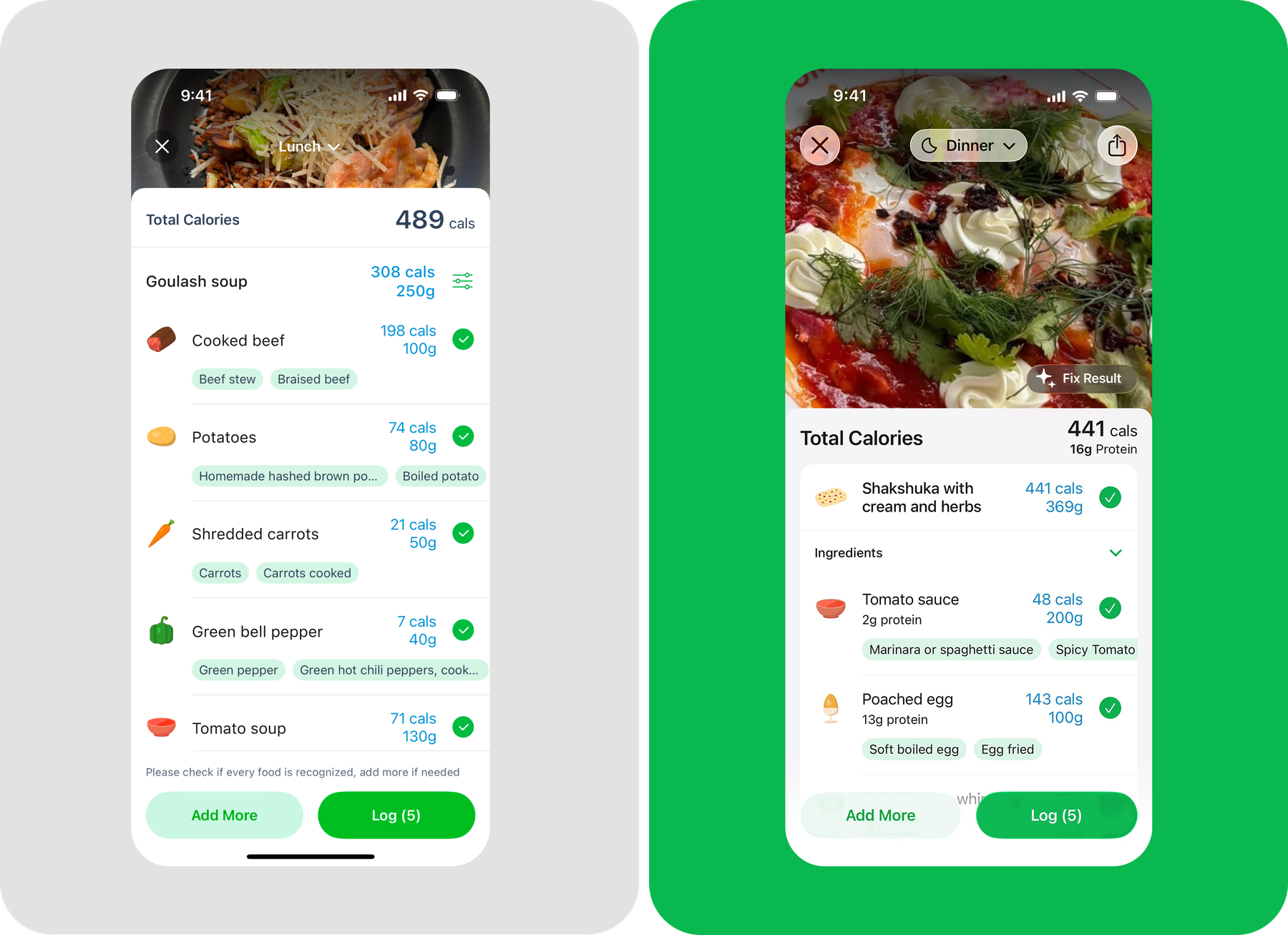
Our research showed that users had different expectations when scanning meals. Some users wanted the fastest way to log food, while others preferred more control over ingredients and nutritional details.
Based on these insights, we introduced several improvements:
Result
Making meal logging faster and more effortless
AI Meal Scan transformed food logging from a manual entry process into a faster and more intuitive experience.
After launch, the feature received positive user feedback and was quickly adopted as a convenient alternative to traditional meal logging.
Key outcomes:
- Reduced manual effort by allowing users to capture, review, and adjust meals instead of adding every ingredient manually
- Made tracking complex meals easier with flexible recognition options
- Increased confidence in AI suggestions through transparent results and quick correction tools
By combining AI automation with user control, we created a more natural and sustainable way for users to maintain consistent food tracking habits.